Unknown's avatar

About Megan Sayer

I'm a writer, mother, artist and dreamer. And I'm Tasmanian, which, for the first time in my life, is a cool thing to admit to.

Lift up your voice with a shout!

Here’s the truth: most of us sing our best when we know there’s nobody listening. When we’re at home. In the shower. In our bedrooms with a hairbrush when we’re still twelve years old and we know that we’re the next best, the next biggest, the next Brittney, so long as nobody ever hears us. We dance, too, tossing our hair like no tomorrow, like we ARE the best in the room. Which, of course, when we’re on our own in our bedrooms with only a hairbrush and a mirror and the song in our head for company, we are.

I don’t know when it happens, that self-consciousness that we all seem to come up against. I don’t know when we stop dancing, or stop singing, or really even why, except that we become for ourselves the people we fear the most. We become our own worst critics.

When I was a kid there were underage discos every Saturday night at the Sports Centre just across from my house. They were called Sock Dances, because they were held on the basketball courts and everybody needed to take their shoes off. They were part of the structure of our town, of our school, of mythic culture, of lore and legend and hours and hours of gossip of who-got-off-with-who-at-the-sock-dance-on-Saturday* and although they were literally just across the street from my house and I loved pop music with an undeniable passion I only went once in my life.  The memory is still fresh, and still makes me cringe a little if I let it.

I danced. I didn’t know any better.

I didn’t know anybody, really. My best friend wasn’t there, and although I knew who most of the kids were from school or from just around, there was nobody there to just hang with, to dance with. I hung around and tried to act cool, like I didn’t mind being there on my own, like I knew my clothes actually were cool even though the other kids might not have recognized it. I forced myself to smile and pretend like I was really enjoying myself, even when the geeky kid’s friends came up to me and said that that-guy-over-there wants to get off with you and when I looked over at him he had this geeky leer behind his glasses and all the boys laughed because I looked.

I think that’s why I did it. Danced, that is. Because of the boys and the laughing and the geeky kid and the not-wanting-to-get-off.

I danced like nobody was watching.

One of the girls there who was vaguely a friend (as opposed to being a downright enemy) was dancing alone up in front right next to the DJ, so I asked if I could dance with her and she said sure, so we did it. We danced alone together like nobody, not even ourselves were watching, like our own tiny spaces were our bedrooms and we sang our lungs out over the sound of the distorting PA system just like we were still holding our hairbrushes in front of the mirror. I loved it, and I went home happy.

I loved dancing. I loved the memory of that night right up until the following week when I overheard two girls at school talking about the sock dance, and they were making nasty remarks, not about me, but about my vaguely-friend and the way she danced how she did, right up in front of the DJ, like nobody else was watching.

Here’s the truth: I haven’t danced in public since.

I do know this is kind of silly. I still dance like a mad thing (yes, to One Direction) in my kitchen. But I’m thinking of this today because of something else that’s happened.

My Dad told me that he read my blog.

He didn’t make disparaging remarks about it. He didn’t say anything bad at all, in fact he liked it. But the fact that he read it, that he suddenly had access to my deepest thoughts, made me self-conscious, and threatened to silence me. And then something else happened: it made me strong. I’m dancing like a lunatic to One Direction in my kitchen, and suddenly people are looking in the window. People that I know. People who have never seen me dance before, but now I know that I CAN’T care about how well I’m doing it, or whether I’m doing it right, I just have to do it. And I have to open the door for them, and invite them to come inside too so we can all dance together, and instead of letting their fear become my fear, I need to let my freedom become their freedom too. I need to keep dancing like nobody’s watching. I need to write like there’s no tomorrow, and I need to lift up my voice with a shout.

Care to join me?

*“Got off with” means kissing. As opposed to “had it off with”, which means sex. Although, according, to mythic culture, lore and legend and hours and hours of gossip, there was a lot of that going on as well.

The secret dreams of the arty-farties

I’d like to be a clean freak, you know. I’d like to have one of those houses where everything has a sparkly plastic box that probably gets wiped once a week and that contain all the essential things a household needs, and every essential thing a household needs would have a sparkly plastic box. I’d have one for my filing, and for my paperwork, which would always be away neatly and on time, and never double-handled, because I would know that double-handling is always a waste of time.

I’d have routines. I’d know exactly when I got up in the morning that I would put away the clean dishes from the dishwasher, because it had definitely and always been put on the night before. I’d open pristine cupboards and neatly place my bowls inside, leaving one out, of course, for my breakfast. I’d know what day I’d be ironing, and I’d do it like Sonnie’s mum who seems to hover the thing over the clothes for the splittest of seconds before she picks up shirts and hankies in their newly-perfected state (although I am suspecting she is, after all, a fairy of some description – possibly an ironing one). I’d sympathise with my friends whose houses lacked sparkle and their constant bemoaning of the difficulties; I’d sympathise but deep down I really wouldn’t understand, and after they left I’d wash their cup and saucer and wipe the bench down and put the biscuits back in the box and shake my head at them quietly and wonder how hard it could be.

I’d like to be a clean freak. I’d never have such an explosion of cobwebs that the ceiling looked like a small trapeze for a fly circus, and there’d be no flies to use it anyway, and I’d be the original No Flies On Me (as my mother always said) woman. I’d never look at skirting boards so dusty it looked like they’d been abandoned for a year in the fallout of an ash cloud, and, even if they had been, I’d never EVER resort to buying stupidly expensive surface wipes that look like something you’d prefer to use on a baby’s bottom, because not only would I know that a cloth and some elbow grease would do the job equally well, I would have done it already yesterday.

I’d like to be clean freak. I tried to do it, yesterday, and realized once again what I realize every time I attempt such an enormous paradigm shift: that between the scrubbing and the decision to write some kind of weekly flow chart that tells me in detail when exactly I should do these things, I realized that my body was on auto-pilot again, and the thinking-and-feeling part of my mind has crawled away on a soft cushion somewhere in the cobwebs and is lost, again, in story.

Kissed the girls and made them cry

I KNOOOWWW!!! It’s the first day of School holidays here, and, to tell you the truth, I’ve been slacking off on Facebook all morning, and, really, I was a bit vague on what I wanted to say here anyway. I’m sorry.

This story is DEFINITELY fiction (unlike the last one, which was true). It’s also quite silly. I wrote it a couple of years ago, thinking about the town my Grandparents lived in. I miss it; in some way missing Shepparton has become my expression of missing them, not that we were ever close. But my love for hot summers and fresh apricots and scorched grass and lawn bowls tournaments, forcer biscuits, lemon butter, hydrangea bushes and brick suburban bungalows are fresh and strong, and every one of these things brings me fond memories of childhood summers in a place I may never see again. Here it is:

“Tim?”

School finished for the year last week. Heat was prickly on my skin like cactus, and me and my brother were outside painting fake snow on our windows for Mum, like we’d been doing every year since we moved here when I was six and he was eight. Now he’s 13 and thinks he knows everything.

“What”. He said it like an insult.

“You know that Shepparton thing…”

Like he could’ve missed it. It was on all the TV stations all day for about a week after it happened. That truck driver that drove through that first morning and found it was all gone I reckon he’s a millionaire now with all the interviews he’s done. They even skipped the first game of the test series against India because of it. Shepparton shepparton shepparton shepparton…we’d never even heard of the place before the whole town up and disappeared like that.

“Dad said it’s aliens.” Tim wiped off the edge of his snow with a dirty tissue.

“Yeah but what would aliens want with Shepparton? Why didn’t they take Sydney or something?”

Tim looked sideways at me and wiped his nose on the back of his hand. “Maybe they like peaches.”

Mum was real cut up about the peaches she said. You couldn’t even get the tinned ones in the supermarkets, everyone was out, and Nan loved Peach Melba on her birthday. Mum’s had to make a pav. I hated pav. I didn’t even like Tim that much, but there wasn’t anyone else around to talk to.

“I think it’s my fault”.

By the time Tim stopped laughing it was getting dark but I just kept working on my snow. It’d been three weeks and I hadn’t said anything to anyone. The guilt felt like a blanket around me; tape around my mouth.

“You made Shepparton disappear. How?”

“The grade six social. I did it. I kissed a girl.” I felt myself getting red and I couldn’t look at Tim even though it was too dark to see much anyway. He wasn’t saying anything.

It was Trace Barker, and she was real pretty, with long hair and all. We were dancing on the slow song and I kind of went for her cheek but she moved her head just at the same time so it kind of ended up her lip, but a bit left.

“I just…I …you know…wanted to see…if it…did like you said.”

“See if what did?”

“See if the earth moved. Like you said it did with Suze.”

“And did it?” Tim sounded interested now.

“Well d’uh! That’s the problem. That’s the night that Shepparton disappeared!”

I was having my weetbix in the kitchen the next morning when Tim sat down opposite me all serious.

“You gotta kiss her again.”

“What?”

“You gotta kiss her again. Come on Sam, if there’s really thousands of people missing off the face of the earth because of you then don’t you think you’ve gotta at least try and fix it?”

He’s right. All them people crying on the news. All them flowers left where it used to be. All that sad in me because only I know that it’s my fault.

Trace Barker lived on Gardener Terrace, which was a posh sounding name for a road that only really saw the arse end of town, and there wasn’t much gardening going on. Me and Tim rode our bikes over after brekky, stopped at the corner shop to get a box of chocolates. We stood in her porch, tracing the up-and-down weatherboards and wondering what the hell the rest of our plan was meant to look like. I tried to take a deep breath but as soon as I’d got my gob open there was Tim ringing the doorbell. Twice. I nearly belted him.

“What? This is what we’re here for, are ya gonna spend all day?”

“But what do I say? Come on, what do I bloody well SAY to her?”

And then it was too late, because the door opened and there she was in her Dad’s Collingwood dressing gown and her hair all sticking up stupid. And then Tim shoved me in the door and pulled it shut behind me all in one move. Far out! This is it. My bit for humankind.  


*          *          *          *


There wasn’t that much blood from what I could see, and Dr Andrews only gave me two stitches which was good I guess, because Trace brought that trophy down on me pretty hard after I kissed her. Dr Andrews didn’t believe me when I said I’d come off my bike, and I was feeling so cut up over the whole Shepparton thing that I started bawling right there in his surgery and told him everything. He was real good for an old bloke. He said it’s not my fault; that sometimes things happen that are bigger than we can understand, that even scientists are still trying to figure out half the stuff in the universe. It’s just weird stuff, or an act of God, or whatever. He said that I can’t take responsibility for something so big, that it’s just…just…


Except that it’s back now, so it looks like I was right after all. 


Dad saw it on the telly. All them people in Shepparton all back, not knowing there’d been all those weeks missing, not knowing there was anything wrong at all. All that crying all over again, and more programs missed because of the updates. Tim hasn’t said anything at all, and he’s been real nice for a change. I’m keeping out of everyone’s way, outside getting sunburned again hanging fake icicles from the roof of the garage. Everyone’s happy because things are normal again. Good for them. All I know is that next year I’m going to a boys only high school…..and after that I’ll become a monk. Or a priest. Or a lighthouse keeper. Anything, so long as it don’t involve ever kissing girls.


Lost, in story

Grade twelve. Seventeen. Mid July winter night and cold, cold, cold. I’d stayed up too late the night before, hadn’t been home in two days and the wind whipping my skirt around my legs bit into my psyche like a rabid dog’s teeth. Truth is I was so glad to see the bus door open I didn’t care about anything else. Kylie Oakley was sitting at the back. She used to live at the top of my street, was in my class in grade five. I hadn’t seen her for a while, years in fact. I gave her a small smile, she looked at me funny, and I thought maybe it’s been so long she didn’t recognize me any more. I didn’t know she had family in New Norfolk still. Friday night. Must be visiting for the weekend.

I pulled out my book and nestled into the warmth of the contoured seats, lost in story and only vaguely aware that the bus was going in a different direction to normal, was parking outside some old building on the other side of the city. Lost in story. I didn’t think.

Lost in story, then in sleep, and later in winter darkness thinking that this road was awfully long tonight, longer than normal, that I couldn’t see snatches of the river through the reeds like I usually could, and the sudden, chilling thought that Kylie Oakley wasn’t visiting back home for the weekend. She was GOING home. To Dover.

I’d never been to Dover. My parents didn’t own a car, didn’t drive, so we never went further than the city and back on the same old bus on the same old route that I knew so well, and never once took a detour to old sandstone buildings on the other side of the city.

When we drove past the sign for Castle Forbes Bay I knew…KNEW…I’d done the wrong thing. Maybe sleeplessness and cold and lostness-in-story will always be the wrong thing, but we soothe ourselves otherwise all too often with soft velour contours and the comfort of warm. With nothing else to do and the knowledge that I was wrong, I got off the bus.

I kept my voice bright and cheerful when I spoke to the driver. “I seem to have gone in the wrong direction. When’s the next bus back into the city?”

He chuckled. “Wrong direction eh love? Ah, next bus back isn’t till Mond’y mornin’”

I smiled politely at him, I could inquire about hotels, but I had no money and was too young for a credit card. All I wanted was food, and I couldn’t even afford that. I clutched my schoolbag and my book. I was lost in story still, but suddenly one of my own doing.

Over near the now-shut shop was a public phone, so I called my Mum and told her I’d be staying down in town for the weekend, and called my boyfriend and asked if I could stay at his house, whatever time I got there. The wind whipped my skirt around my legs again, but I tried to keep my voice steady while the tears froze on my cheeks.

Nothing else to do. I hitched my schoolbag over my back and wrapped my thin cardigan as tightly around myself as I could, and started walking back towards the city. I prayed. I sang songs, worship songs, pop songs, whatever came, as loudly as I wanted to keep the fear at bay, and to tell you the truth I kind of enjoyed the adventure until the first car drove past and ignored my outstretched thumb, as did the second, and the third. Nice cars, all of them, and I hated them for ignoring a forlorn teenager in the rain on a deserted road, and wished all hell on their heads if I never made it home again.

By the time a car finally did stop, some half hour later, I was soaked to the skin and sobbing with gratitude. It was an old white ute, twin cab I think they call it, with three burly men in the front wearing grimy coats, and a slab of beer and a shotgun in the back. I told them my pathetic story and they laughed like drains until they wiped their noses on their sleeves and asked me to pass them a beer each.

They offered me a beer too. I said no. I didn’t drink, and I wanted to keep my wits about me. They didn’t say where they were going, but the car was warm and heading to my precious north again, towards the city. Too tired to think, I prayed in my head, and tried to answer their questions politely. They asked me about my book, and I told them about the story, about the author, about early 20th century literature, losing their interest quickly, but desperate to keep them thinking about me as a person, and not just as a seventeen year old girl trapped in the back of their car. I tried to calculate how fast we were going, how easily the doors opened, what was on the side of the road and how much I’d hurt myself if I jumped out. They were friendly though, and hurled their empty beer cans at speed signs before politely asking me to pass them another one. I stuck with them. There was no other choice.

It wasn’t until they pulled off the main road that the panic set in. Dirt track, down to nowhere, ute parked in the bushes and in the dark. They three men talked quietly among themselves for a minute, and when one opened the door and got out I grabbed my bag in one hand and my door handle in the other. I wasn’t strong enough to fight, my only choice would be to run, but for now I waited. I shifted my leg, leaned forward to see what the dirty white thing on the floor was. The sky cleared momentarily and the moon shone in the window. It was a child’s toy, a once-plush thing in a red dress. A lamb.

I felt the words rather than heard them. A snatch of a song I loved. A bit of the bible I’d read only recently. “Behold, the lamb of God”.

The third man came back to the car with something in his hand. He passed it over as he sat back down again, and the three men took in turns to bubble the creek water and inhale. They passed the bong back to me more than once, happy to share, although I happily declined. I kept my eye on that lamb, the presence of angels strong.

After their bong they turned the ute back around and drove back up that dirt road, then headed north again. We all fell quiet, listened to the football on the tinny transistor, I handed them beers as they asked.

I didn’t realize it until the paddocks started giving way to houses, and the houses gave way to suburbs, and one of them said “I reckon it’s been about twenny years since I’ve been to the city”. They asked me for directions, and I led them into the city and out the other side, down the highway, tears of gratitude again streaming down my face and not anywhere near enough time to thank them enough. They dropped me off at the bottom of my boyfriend’s street, and laughed and waved again as they turned around to drive the hour or so back home.

Behold, the Lamb of God.

We just never know who’s gonna be the ones giving us a hand.

What about you? Have there been unlikely heroes in your life? Good Samaritans? Drunk men doing the work of angels? I’d love to hear your stories.

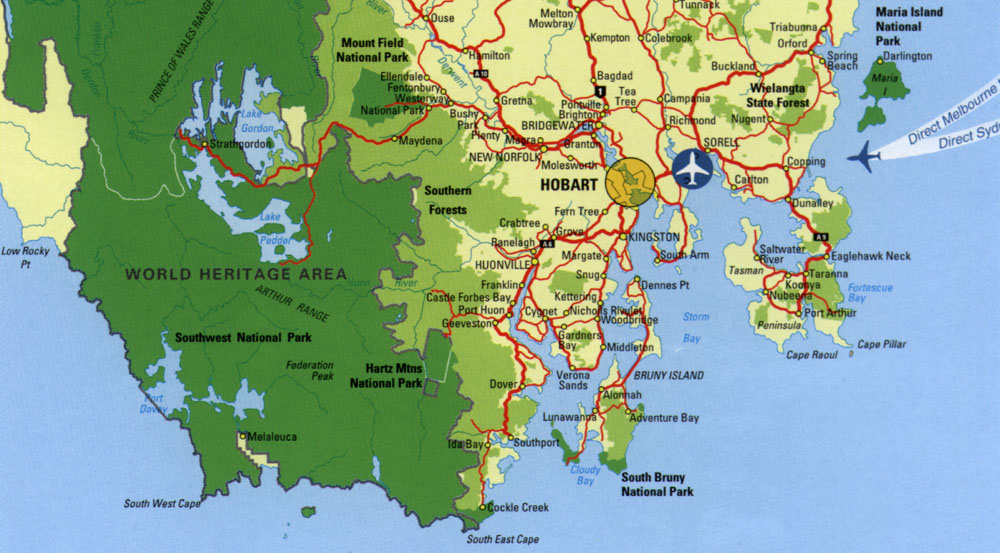
Hobart and Southern Tasmania

Four Things that are 100% True

Here’s the truth: it’s been a big week. I do apologise for not blogging on Friday when I’m trying to be consistent in these things, but there’s no denying it: between sickness and health and estrangements and reconciliations and house moves and some other really quite big things, it’s been a big week.

And…I did it. It. The thing I blogged about a little while back, my Small Dream. Alongside sickness and health and estrangements and reconciliations and big weeks. It went well. Actually, I loved it. I didn’t want to leave and then I cried on the way home and if I could put my whole life and sickness-and-health-and-estrangements-and-reconciliations-and-house-moves aside and just stay there for the next two weeks I would.

It wasn’t easy by a long shot, and to tell you the truth this week I’ve had to deal with some of the deepest truths of who I am and how I’ve seen myself and, more importantly, why I’ve held those beliefs about myself for so many years. There have been tears. You don’t do change without it. You don’t do life-stage changes and moving forward into new one without some grief about the past and the things you’ve lost, or the opportunities you didn’t know you had until they were gone. You need sometimes to face the truth, hard though it may be, and give it the time and space it needs.

Here’s another truth: sometimes the time and space grief needs is shorter than we allocate it and we don’t know how to let it go. Ouch.

Here’s a hard truth: sometimes I can get so caught up in myself and my own pain that the small things become big things, and the real fears give way to worry about whether my fears are justified or not and whether I’m just being too intense andamInavelgazingagain,andwhatdoessoandsothinkandyouknowIneverwasthatgreat…

Oh SHUT UP WOMAN!

This is why we tell fart jokes. This is why we take walks and smell flowers and watch Dr Who and dance like maniacs to One Direction in the kitchen Image

(come on, you know you want to!) This is why we believe – or need to – in something bigger than ourselves. It’s because living is, after all, quite fun. Because, when all is said and done, we all think we’re too fat or too skinny, too intense or too shallow, too fearsome or too foolhardy and too…too anything for anyone to really love us if they knew. It’s truth, right? And it’s because we know it, and because we know all about our own failings and insecurities that we’re free to love those around us in spite of theirs.

You know it’s true. I actually don’t care about the way you flip your hair or stare at the ground (and if you don’t understand that you’ve obviously not been dancing like a maniac to One Direction in your kitchen lately – or you don’t have an 8 year old), but I do want you to know one thing that’s true: whether you know it or not, you are beautiful.

And that’s God’s honest truth.  

“But Mummy, The Emperor has no clothes on!”

By the end of childhood, if we’ve grown up well and successfully, most of us seem to end up with two lessons firmly instilled in our minds:

  1. Be honest.
  2. 2. Be nice.

And, if we’re honest with ourselves, the subtle message that we’re given is that 2 overrides 1. So don’t be honest if it means being not nice.

Eh? I, for one, am beginning to notice the flaws in this.

I was chatting with a friend last night and she said some powerful words: Not Telling All The Truth is the Same As Lying.

It’s a funny boundary. I’m not sure what I think of this statement right now. I understand that sometimes there’s just too much truth to tell, and because it’s understood implicitly we don’t need to state it. My friend doesn’t walk into my house and say “wow this place is messy and what’s that funny smell coming from the corner?” (possibly because it’s usually in some degree of mess, although as soon as I figure out what that funny smell is coming from it will be gone!) although to do so would be an expression of truth, and she’s not lying because she didn’t say anything.

If, on the other hand, before she got up on stage before a large audience she asked me “Do I look fat in this?” and I said “No!” (truthfully) but neglected to tell her that the back of her dress was caught up in her undies, then that’s kind of what she means.

Sometimes we need to say the hard stuff.

Being the first person to say it will always be hard. You will always feel stupid, or wrong, or maligned or ashamed for doing so.Sometimes though, if things need to change, being honest is the only thing to do.

Guns and memories

This is from my personal “archives”, so I apologise to those who have read it before. I had another article to write this morning, and I didn’t have time for two. I think it’s appropriate to share here though because it’s the reason I struggle with anxiety over my trip to the US. It’s what I was thinking when I wrote last Wednesday’s blog. 

Tasmania lost its innocence on April 28th 1996.

I don’t think about it much, but I’ve got friends now who weren’t there, and friends who were barely children themselves when it happened, and although it seems like a very long time ago, today the memories seem unusually fresh. Maybe it’s time to remember.


   I was in the kitchen over near the fireplace, and Tony and his mate Matt were sitting at the table when he told us. That was the first I knew, and that felt weird because with something that big you’d presume you’d know already, not second or third hand like that. You’d presumed that in a place this small, in a place like Tassie that you’d hear the helicopters, and that would make it feel real. And you’d presume that Matt would have told us as soon as he came in, not half an hour later as if he’d forgotten. Maybe he wasn’t sure of the truth of it either.

   But Matt told us. He said it in that edge-of-your-seat kind of voice; that awed voice of “we see this in movies, but this is our thing, our very own Tassie thing”, even though it was never something to be proud of.

   “You know what? I heard this guy pulled a gun at Port Arthur, and he’s shot about twenty people”.

   We’d presumed the report was an exaggeration. They always are. Twenty people dead is too many, and this is Tassie. Nothing happens in Tassie. Nothing like that.

   But it did. We heard later about how the helicopters kept coming and coming, not enough to get everyone to hospital in time, and people kept dying.

   Twenty became an understatement, not an exaggeration.

   I wasn’t there, of course, at the hospital. I can only imagine the fear and the confusion and the blood and the stench of death and dirt. I can only imagine the fear at the site, and having to pick up the bodies, of waiting for the phone calls from family members who’d been out for the day and not come home. I can only imagine the grief.

   By the time we went down it was some three weeks afterwards, after the memorial services and the news reports had burned the images into our brains; after those poor little children and their Mum had been found and buried along with all the rest of them, people whose names were becoming as familiar to us as our own.

   The drive felt normal, fun. We sat in the back of the car and chatted about the weather and about church and about life and haircuts and bread and things, until there on the road we saw first bunches of flowers and then the police tape over the driveway where the first victims had fallen, and we fell silent together.

   As soon as we entered the Port Arthur historic site we felt the grief. It hung over the place like a cloud, even though the day was barely overcast. I didn’t know before that day that emotions could cling to the sides of a place like mist to the valley. I didn’t know that I’d walk into a place I’d been to numerous times before, and just by being there I’d want to cry.


   I felt like an intruder at someone else’s funeral. I didn’t know anybody who had died, although in months to come I’d meet people who’d known them, and I’d meet people who’d been there only the day before, or were meant to be there except for an illness or a broken-down car that maybe saved their lives.

   We all wanted to cry, but if we did we looked away and wiped our eyes so nobody saw us, because it felt wrong to feel a grief that wasn’t ours, and nobody knew how to act.

   There were kids with us too, and their natural curiosity and questions mirrored our own unspoken ones. We followed them to the sea of plastic-wrapped flowers outside the café, and we laid our own tributes as well. The first flowers were decaying now, and went all the way up to the police tape, but the sea of them went for twenty metres or more. There were flowers upon flowers upon flowers, and cards, and teddy bears for the little ones, an outpouring of grief from a community who didn’t know anything else to do, or any other way to feel. People like us, who traveled a hundred kilometers or so because that day we were all part of the same community.

   Maybe we should have allowed ourselves to feel it more than we did, but at the time we didn’t know. Nobody tells you how you’re supposed to feel when 35 people are murdered for no reason in a place you’ve always considered safe. We felt relieved that we were safe, and guilty for crying when we had nothing really to cry about. We were alive, after all, and our families were safe. And we felt guilty for that as well. We wanted to come and feel with people who felt, and mourn with those who mourned, but beyond our pointless presence and our prayers there was nothing we could do.

   Nothing could prepare us.

   We prayed for the families of those who’d been killed, and for the people still in hospital. We prayed for the people who would always have to live with the memories of what they saw that day, and we prayed for those in the hospitals where there weren’t enough beds, and for the people who had to fly those helicopters that carried the survivors home.

   We drove home with thoughts unspoken simply because there were no words for what had happened on that day. A place of so much suffering in history had again become a place of so much suffering. There was only one thing we knew for sure: On the 28th April 1996, God cried.

The Port Arthur massacre was the catalyst for massive gun law reform in Australia. There was an amnesty on all automatic and semi-automatic weapons after this. Handguns are banned, although I’m not sure if it was because of this or not. It’s such a different reaction to the US, where people seem to respond to mass-shootings by arming themselves.

I can’t say whether either country’s response to guns is right or wrong, but I do understand that this is where my fear of guns comes from, and why it’s taken me a while to really believe that I won’t be shot dead at LA airport the minute I get off the plane. Memories – and feelings – are funny things.

So what you think about guns, about unexplained fears that resurface when you thought you were over them, about feelings you’re never quite sure why you have? Talk to me. I’d love to listen.

On the art of nothing to say

Earsick. Antibiotic sick. Headstuffed. Codeined. Did I boil the kettle? Am I awake or dreaming now?

“MUMMY HOW WILL KATIE BE ON HER BIRTHDAY?”

Her birthday is in six weeks. She’ll be nine. I tell him that.

“NOT HOW OLD WILL SHE BE; HOW WILL SHE BE?”

Head swims back from inside itself. I’m lost there on a dreamless ocean.

What?

This small person is reaching to me, looking for answers.

“CAN I HAVE A MILK NOT A GREEN CUP THOUGH BECAUSE I DON’T WANT A GREEN CUP CAN I HAVE A MILK IN A THOMAS CUP PLEASE BECAUSE THOMAS CUPS ARE MY FAVOURITE CUPS”

Thomas cup. Yes. Milk.

Steady thrum like a drone now. A rich red sea. Small light breaks in at the window.

“TOMORROW I WET MY PANTS WHEN I WAS ON THE COMPUTER BUT I DIDN’T MAKE A PUDDLE AND THEN I TOOK THEM OFF BECAUSE THEY WERE WET AND I PUT THEM ON THE DIRTY WASHING…MUUMMMYYY”

He wants me.

Someone remind me of this one day: this is what it must feel like to be dying. Not the pain, I could never cheapen such a hallowed experience with the momentary hassle of my ear infection, but the lostness. Or, perhaps, the centeredness.

Deep within myself, at times like this, is the only place to be. And all I want is the periphery – the milk and the birthdays and the Thomas cup and the dirty laundry – to disappear, and for the people around me to be here with nothing but themselves to clothe them.

In a few days when my small and temporary pain is gone I’m sure I will forget all this, and I will be the one again who bustles into someone’s pain with unsure words of birthdays and milk and dirty laundry because I don’t know again what not to say.

Pain, it seems, is nakedising. I hope that the act of writing will help me remember this.

How do you feel?

Nobody ever really tells you how you’re meant to feel about things. This is a good thing, I guess, but sometimes I wish they would. I think that there would be many, many people who’d jump at a book that explained to them that slightly numb feeling of comforting a crying child while flushing their bloated goldfish down the toilet, or how to tell your nine year old daughter that yes, one day she will have periods. For forty years.

Okay, maybe not how you’re MEANT to feel, but how other people DO feel. The this-is-normal type things. They did it with grief, and with trauma. They have counselors who refer people to glossy leaflets and say things like “you might feel this. This is perfectly normal, and many people go through this”. Wouldn’t it be nice if those glossy leaflets were there for everything?

Seriously, wouldn’t it be great if we could just call up the Emotion Help Line, and have sent to us a colour-coded series of fold out brochures on How You Should Be Feeling When: Red for angry feeling, green for jealous feelings, blue for sad, the usual stuff. The obvious ones, you know. Or maybe we can genetically modify ourselves so our little fingers turn the right colour to express those emotions too. That’d be so helpful with babies, particularly…although green fingers on a two-week-old might be difficult to understand.

Okay, I guess some things we just need words for, and people to listen to them.

I think the problem starts in childhood, with well-meaning parents (ouch…like yours truly) who pick up a screaming toddler from the concrete and brush them down and say perhaps-not-so-helpful things such as “you’re all right now”, and “up you get, you’re not hurt!” I’ve always considered such phrases useful, helping build children who are resilient and able to pick themselves up from the falls of life…although sometimes, if the truth be told, we say them because we’re tired beyond belief and can’t deal with another small-person drama for absolutely no good reason.

The trouble comes though when we get to big, complex, hard-to-get-to-the-other-side-of emotions. Aside from sympathy, some empathy, fear and “survivor guilt”, how do you deal with the deep and personal feelings that come up when you find an acquaintance has a child with a terminal illness, or a birth defect? How did the people feel who went to see batman movie in completely different cinemas in Denver on that fateful night when so many lost their lives? Do they have people around them telling them “you’re okay, you’re still alive, aren’t you? You didn’t hear the gunshots”.

The trouble comes when, not knowing how we’re meant to feel, we end up feeling nothing. That in itself is a problem. I wish there was a book for those people. I’d read it.

350 Million Americans Can’t Be Wrong…

When I was a very, very little girl, so little that my mind was super-malleable and everything that I was told I believed, and so little that I still though that the half-hour break in TV programming between Sesame Street and Playschool was endlessly long, something happened to shape my thinking forever.

It wasn’t a bad thing, this isn’t some kind of true-confessional “this-happened-to-me” time, just…a thing. A thing that, because I was so little and my mind so malleable I can’t shake.

Some people came to visit.

I don’t remember their names, and as they’ve never visited since I don’t think I’ll bother dredging them up. There weren’t small children for me to play with so they didn’t interest me too greatly, and if there was a man he in my memory he’s dissolved into the background. There was a woman though, and because I remember looking at the photo in the family album for many years after their non-eventful visit I remember that she had black hair and a blue dress and glasses, and looked a little like a friend of ours, but she wasn’t.

But I remember the accent. Oh the accent! She spoke in a voice that was rich and beautiful, a voice I’d only ever heard on TV before, and because of that voice I wanted to sit on her knee and fall into her and listen to everything she said, because she was obviously famous and wonderful and exciting, and her sheer presence in my house made me, by default, famous, wonderful and exciting as well.

You’ve got to understand, you see, that I’d never heard people talk like that down here in Tasmania. Down here everybody used the same slightly nasally whine and flat, nasally vowels that I’d heard every day, the same stretched-out voice that I had. Not the Blue-dress lady though. She was beautiful. She was from the Television!

I was four. You have to forgive me when I say I was incredibly disappointed when my Mum told me that she wasn’t from the Television at all. She didn’t live on Sesame Street. Sesame Street wasn’t real. The Blue-dress lady was from Canada.

Not America. Canada.

Sesame Street Isn’t Real.

Ten years or more happened before I ever heard that accent again in real life, and by that time I’d got pretty solid on the truth: Sesame Street Isn’t Real. Not America. Canada.

Okay, here’s the true-confessions part. Please don’t laugh. Oh, okay, but laugh quietly, all right?

It was only a couple of years ago that I realized that America-Isn’t-Real-Not-Sesame-Street-Canada had taken root in my brain for more people than just the Blue-dress lady. I’d somehow started applying it to everyone I met with a TV accent. They couldn’t be American. TV isn’t real. I worked for a year with a lovely “Canadian” lady, and…ouch-this-hurts-to-admit…it wasn’t until I reconnected with her via Facebook and read her blog that I realized she wasn’t Canadian at all.

Nor were the nice people who came to the Wednesday night meetings. Nor are the lovely harpist girl and her family, or Susie Finkbeiner.

America IS real. I KNOW this. I am an intelligent woman. I read books. I study history. I watch documentaries, and I do know enough about the US of A to know that yes, it DOES exist. Except…

Except sometimes old thoughts are hard to break, especially when they happen when you’re very young, or particularly vulnerable.

I’m butting up against a few thoughts at the moment, more serious cases when I’ve believed something that someone’s said and then applied it to every area of my life. So here’s my thought of the day:

Not Everything You Believe Is Necessarily True. Sometimes you need other people to help you get some perspective. After all, 350 million Americans can’t all be wrong…

Image