blog post? What blog post?

Arrrrgghh…

There’s carpet going down! My study is empty. My lounge room and bedroom are so full I can’t even get into them.

I’m so tired I can’t even remember basic words like…like…oh you know what I mean.

See ya Monday folks. In the mean time, go be nice to someone who looks stressed and grumpy. If they ask why, tell them you’re doing it for your Tasmanian friend!

A change is as good as a holiday

This is a Christmas-newsletter-type post for anyone who wants to know what’s really going on in our lives right now, and for anyone who (like my dear friend Wanderer) has noticed the random nature of my blog topics of late. I do apologise. Feel free to skip this and come back on Thursday if you prefer, when I’ll (hopefully) have something interesting to say.

Or keep reading…

When my dad died in December last year we inherited a decent sum of money from him. This isn’t something we’d fully been expecting, considering he’d been on a pension since 1985, but stranger things have happened. And no, inheriting a decent sum of money doesn’t really make up for losing my dad, who’d only just moved back to our state after a 20 year absence.

So we’ve got money, and for the first time in our married life we can make choices based on what we want/feel is right, not on our financial limitations. We’re putting down carpet in our house for the first time (yes, believe it, the place gets COLD in winter!), and we’re upgrading the kitchen (if you’ve been here you’d know why. It has issues). We were already in process of purchasing a parcel of land and a garage from our next door neighbours, although the original plan for that was to build a granny flat for Dad, who no longer needs it. Any of you who have ever had to deal with council requirements for things like this in Australia (I can’t comment on elsewhere…hopefully it’s EASIER!) will know how hard it is. And, because we can, and because it feels like the right thing to do, we’re packing up the kids and going on a 2-month family vacation to the US and Canada, where I’ll also get to attend the American Christian Fiction Writer’s Conference in Indianapolis, and pitch my work to people who may…MAY just be interested in publishing it.

Yay. All this and a holiday to boot. We are blessed, incredibly blessed. We know this. There’s no way we’d complain about anything right now. No. Way.

So, I don’t like to talk about the huge amount of furniture I have to move and the difficulty in throwing things out and wondering whether it’s wrong that I’m adding to landfill with children’s toys I’d meant to fix or find the missing pieces for and now I have to get them out of the house…NOW…because the carpet people are coming. And how we’ll live with all our furniture stuck in a kitchen for a day or two, when there are still children who need school lunches and meals to be cooked…and doing it all again when we rip out the kitchen window, and a few weeks later the kitchen benches and stove for a week, it’ll be too late to worry about landfill then…and I need to book the tickets to the US, but first I need to finalise the dates, and make sure there’s somewhere appropriate for us to stay in each place, and convince the kids that yes, they may all be sharing a queen-size bed for a week, three of them together, and that’s just okay. I don’t want to talk about it because, really, this is seriously first-world rich-people problems, and I’m so grateful to have carpet and so incredibly grateful to have a new kitchen and so UNBELIEVABLY grateful to have a family holiday overseas, let alone the chance to pursue my dream of becoming a published author, and my husband’s dream of stepping into business full-time, and…

It’s all so good. So SO good. So good that I don’t want to even mention how incredibly stressful it all is right now.

We. Will. Get. Through. It. It. Is. ALL. GOOD.

But please forgive me if I drop the ball a little bit sometimes, or if I get a bit random in my blog posts, or take a while to reply. A change is as good as a holiday…change of any sort–including holidays–rates on the stress scale.

I’ll talk to you soon. I promise. I just can’t promise to make a lot of sense!


The Tasmanian Fairy Tale Shop

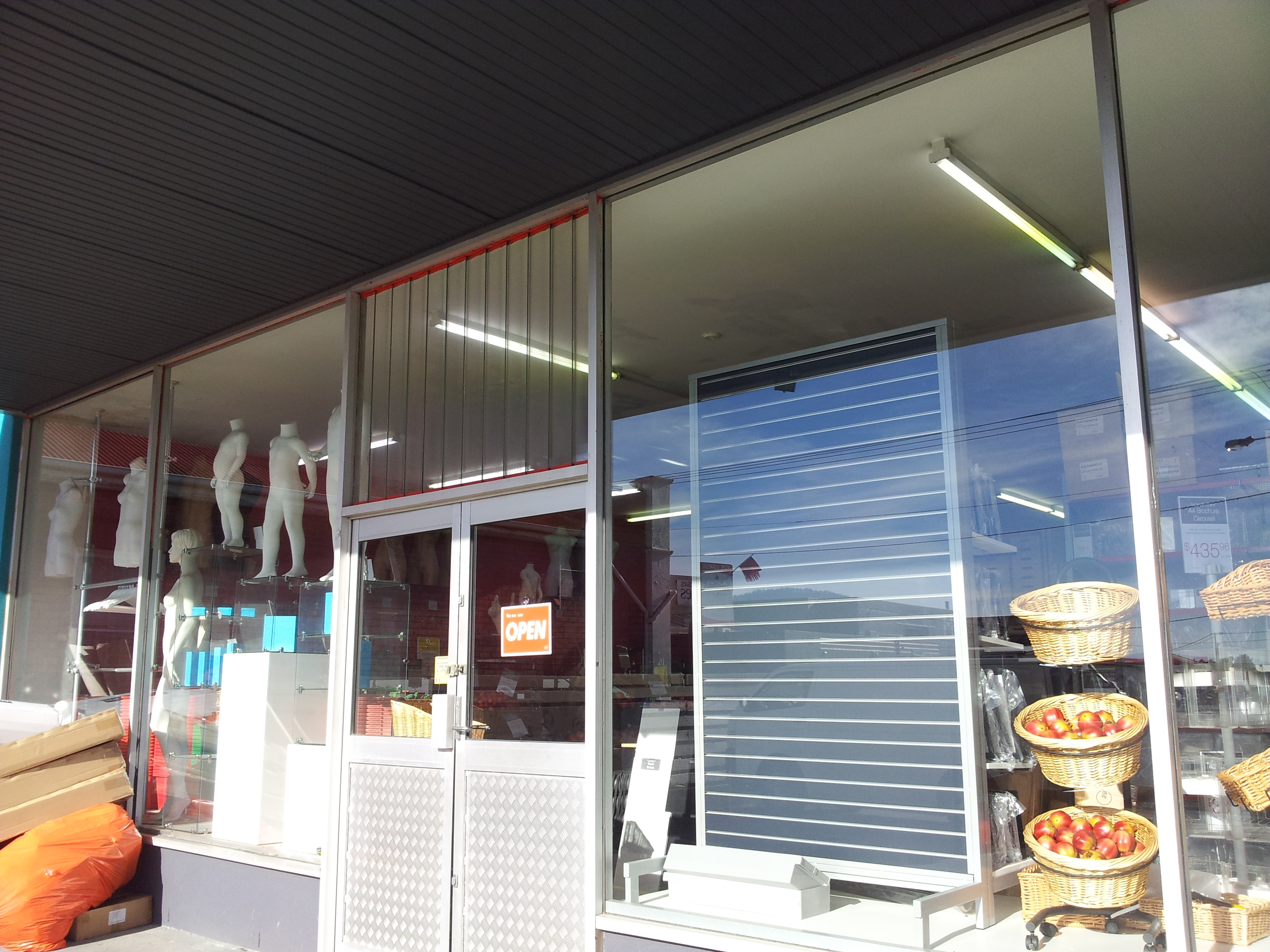
Shop window with applies and naked plastic childrenSo I went for a walk the other day, and on my way home I walked past this shop. Naked plastic children (headless)…and baskets of apples. Because they go together.

Now I live here. I know what this shop is, and what I’d find if I walked inside. I’m sure you could work it out pretty quickly too. But just for a moment, because it’s fun, let’s imagine…

This is a Fairy Tale Supplies Store. It’s called Anderson&Grimm, and out the back there are axe-sharpening tools and a selection of different types of porridge. There are chairs and beds of different sizes and levels of comfort, a rack of capes for sale in varying shades, from crimson to scarlet, and dog-grooming products. Behind the counter there are sleeping pills, fertilizer, rat poison and anti-frizz hair products.

Because that’s cool.

I’m hoping that the vacant shop next door will soon be taken up by Ms. A. Christie and her display of model trains, 1930s decor, moustache cream, arsenic, fluffy cardigans and a rack of brown suits. With a few cracked mirrors. I’d love that shop.

Dream with me today, my friends. There’s an empty shop near you, tucked away in an obscure little back street that only the locals know about. What would you put in it?


The disposable world

Electronic refuse at the local tip

Electronic refuse at the local tip

I remember a day when colour TVs were a luxury that not everybody could afford (granted, there are people who remember when TVs themselves were that kind of unaffordable luxury, but I’m not among them). I remember watching Sesame Street in black and white in 1979 when all of a sudden white smoke started coming out of the black box…into my white lounge room…and a week or so later we had an enormous colour television wrapped in brown laminate, standing on little brown legs in the corner of our lounge room. Full. Glorious. Colour!

I remember walking into a big electrical retailer a few years ago and marveling at the size and scope and sheer range of the beautiful big TVs for sale in there. All of them big, silver and shiny and much, much more fancy than ours. Yet all of them now are here, like in the photo, outside in a row of giant and overflowing skip bins.

This was taken at my local tip a few weeks ago. There are three more tips that I know of in my small city, and there are probably a number more that I’ve never needed to know about as well. I imagine they all have overflowing bins like these. Our tip has a large recycling shop too, including a electronics recycling store (drop it off, fix it up, ship it out). I dropped my microwave off there after it decided to downgrade from full-time work to part-time. There was a sign out the front saying “no more TVs”. So the rest, presumably, are on the tip face itself with all the potato peelings, take-away containers and disposable nappies.

Now don’t get me wrong. I am guilty here too. Our old TV is possibly buried at the bottom of one of those skip bins, and dirty nappies from my three babies are buried up there on the tip-face where they’ll sit for the rest of eternity. I’m not proud of that, but I did what I needed to stay sane and live my life as best I could at the time. And not only that, manufacturers are promoting this too. I could have taken my microwave to the electronics repair place, yes. I didn’t think of it until today. I could afford to buy a new one, so I did.

What makes me sad though is that in all the consumer reviews I read on the best microwaves, every consumer said that they got three years use out of them at most.

I’m not writing this to try and change the world. I can’t. I just wanted to say something, to acknowledge a dirty capitalist truth: we think we live in a disposable world. I wish we didn’t think that.

My next-door neighbour has an old fridge in her garage. I was helping her move it the other day, and asked her if it still worked. She said yes, it just needed to be re-gassed. “It was a good fridge”, she said. “Nobody would want it now, though”. And she’s right. In a few weeks it’ll be on the white-goods pile on the tip-face, a white-mountain monument to our desire for new and shiny and better.

I’ve been pricing new fridges and freezers too. Both of ours are second-hand. The vegetable compartment of our fridge has a chunk of plastic missing, and the freezer is probably thirty years old, with funny brown rust-marks on the door. I’ll advertise them in the local flea market, because they’re still decent enough appliances. I may sell them to some university student too impoverished to shop at Harvey Norman. They may use them, then graduate and move. I hope they’ll sell them on, or give them away. I have to live in hope. It anaesthatises my brain from the reality that my fridge shopping is a few steps down the road from adding to the mountain at the tip.

What about you? Do you struggle to throw things away? Are you a super-recycler, or a must-have-the-newest-thing person? Or, like me, are you somewhere in between, a foot in both camps, wanting the newest, latest, prettiest, but struggling to let go of the old? Do tell!

The Orphan: a short story

This is a little story – a real, fictional, short story – I wrote a few weeks back. Actually it kind of exploded out of me in a strange fit of…umm…literary diahorrea, if I could call it that (you may describe it as that after you read it, but that’s another story!). It’s been a long time since I’ve written any short fiction, and it could probably do with a good edit, but sometimes when these things come out like that the best thing you can do for a while is stare at them and leave them as they are. 

Here it is, anyway. Hope you enjoy it. 

The Orphan

by Megan Sayer (c) 2013

Millicent lived at the Orphanage on Archibald Street, and had lived there since the death of her parents when she was five years old. She loved the grand arches of the doorways and the tall oak doors. She loved the creak of the floors above her as she studied her books and looked at her sewing during the days, and she loved the swoosh sound of the great oak branches on the roof above her as she lay in bed every night. She slept in a room with five other orphans, on a narrow wooden bed with crisp white sheets that were changed every other day by Miss Nancy, the housekeeper; and given porridge in the mornings and sandwiches at noon and pot roast in the evening for supper, with boiled potatoes and vegetables. Millicent loved boiled potatoes and pot roast, and she loved knowing that on Sundays there would be apple strudel for dessert, and for birthdays and adoption days there would be cake. Millicent loved cake.

Millicent loved the Orphanage. She took pride in keeping the crisp white sheets straight on her narrow bed, and swept the dining hall conscientiously every Tuesday evening and Thursday morning, which were her turns. She loved Miss Nancy, and Miss Hattie the cook, and Mrs Cottlebottom, who sat in her office and presided over the doings of the Orphanage at large. Millicent remembered when Mrs Cottlebottom was just new, and Mrs Hanover before that. Millicent had been at the Orphanage longer than anybody, which is maybe why she loved it. The Orphanage was home.

Millicent dreamed though, and in the mornings while she straightened her crisp white sheets, and during the days while she did her bookwork and her sewing, and during the evenings while she bathed and dressed and after dinner on Tuesday evenings while she swept the floor of the dining hall, she dreamed that one day she too would be adopted. Everybody who wants to gets adopted, that’s what Millicent believed. That’s what she’d seen, too. Everybody who wants to gets adopted eventually.

Not everybody wants to though. Everybody knew that, everyone from Miss Cottlebottom right down to the very smallest children. They’d all watched the ones who didn’t want to go, watched as their eyes turn hard on the faces of would-be parents and the frowns come over them, watched as those ones came back after afternoon visits to the park and swore never to go again. They were the ones who’d leave on their own—or sometimes with a friend—and find a job and an apartment and start a new, orphanage-free life of their own. Not Millicent though. She knew in her deepest heart that one day, if she kept dreaming, that one day she’d be adopted.

It was a Thursday morning the day her dream came true. Mrs Cottlebottom sent one of the smaller girls to fetch her up to her office, telling her not to worry about finishing sweeping the dining hall, to come and to come now. Millicent did so. She dropped her broom right where she was standing, hitched up her apron and ran as fast as she was able on trembling legs. She knew before she got there what was about to happen. Being called to Mrs Cottlebottom’s office meant only one thing.

Millicent didn’t expect that her nerves would go out on her at the last minute. She’d never once, in all the times she’d dreamed this moment, imagined that the great dark-oak doors would look so foreboding, or make her feel so small, so unlovely. She knew then, in the seconds it took for her to smooth her hair down with her hand, why it was that some of them didn’t want to go.

Taking a deep breath and an even deeper swallow, Millicent pushed open the door. “You asked for me, Mrs Cottlebottom?”

“Millicent, my dear. Come in!” Mrs Cottlebottoms’s smile was wide and welcoming, as always, and Millicent stepped inside, letting the heavy door swing shut behind her. Mrs Cottlebottom sat behind her desk, as usual, and next to her sat the oldest woman Millicent had ever seen. She was as brown and wrinkled as a sultana, and as skinny as the empty grape stalk that grew it. Her hair was powder-white, and fluffed big like a cloud, although thin enough to see through it all the way to her brown and wrinkly scalp. Her mouth was wide and pink however, and showed a row of teeth so shiny and white they must have been polished with bleach, and above that smile were eyes that glowed like diamonds in the sunshine. Millicent liked her, but found herself too shy to meet her gaze.

“Come in, dear. Sit down.” Mrs Cottlebottom indicated the chair in front of the desk, and Millicent quietly obeyed.  Her mouth felt dry and she could feel her heart beating so loudly in her chest she wondered if the ladies opposite her could actually hear it. They didn’t seem to notice, and Mrs Cottlebottom’s bright voice continued its lullaby of words and information. Millicent studied the sunlight shining through the lace curtain.

“…of course Gertrude will always…” Millicent tuned out again, tuned in to the rhythm of her heart beating, wondered what vegetables there would be with dinner tonight.

“…And don’t forget, my dear, if you ever…” Millicent suddenly realised she would not be there for dinner that night, perhaps not any other night after this either. A fat tear formed in her eye, and she opened her eyes wide, as if to try to suck it back inside.

The old lady, Gertrude, was filling in papers with peculiar spidery handwriting, her gnarled hands gripping the pen in a way that looked completely unnatural to Millicent. This woman was to be her mother. After all her years of dreaming she was finally to be adopted.

A mother of her very own.

A home. A place to belong.

There would be cake for lunch today, maybe even a chocolate one. And today the adoption cake would be for her.

Millicent went to live at Gertrude’s house. It was neat and shiny as a new pin, with polished rails leading upstairs to two bedrooms, side by side, one for Gertrude and one for Millicent. Her new bed was not narrow with crisp white linen, but wide and soft, with a mattress that sank into the middle with a body on it, and hugged that body all the night. Millicent liked it, but she wasn’t sure how much she was allowed to.

She wasn’t sure how much she was allowed to like the new things for dinner, either. Sausages in casserole. Chicken pieces with breadcrumbs on them. Real ice cream, and no apple strudel on Saturdays. Gertrude told her that she didn’t need to sweep the kitchen floor on Tuesday evenings or Thursday mornings like before, but she did anyway. She didn’t know any other way.

Gertrude, in spite of her age—or perhaps because of it—was sprightly and adventuresome. She rose early in the morning and cleaned the already-clean kitchen and polished the already-polished bannisters, then she cooked some porridge for Millicent and herself and set about her day’s activities. She volunteered at a home for unwanted cats on Wednesdays and walked with her ladies’ group on Mondays and Fridays. On Tuesdays she shopped and on Thursdays she cooked. Every morning she asked Millicent to join her, to come with her on whatever activity she had planned for that day, and every day Millicent said no thank you. She preferred to stay home and do her bookwork and her sewing, just as she had always done.

The ache in Millicent grew though. She took herself to bed earlier and earlier each night so as not to have to sit with her mother in silence, companiable or otherwise. She could no longer enjoy the soft hug of the mattress, so she took it off the bed and slept on a blanket over the springs. She could not eat cake, so she feigned illness and left dinner untouched. Then one day she stayed in bed instead of coming downstairs for porridge, and decided she may never come back downstairs at all. Millicent understood finally that she had been in the Orphanage for too many years. Her dreaming for so long of life with a family had not prepared her at all for the reality that one may really show up. Dreams are neat, and neatly contained. Dreams have beginnings and endings. Real life, like family, is a messy affair.


Millicent was still in bed at lunch time, when Gertrude came back from her morning at the home for unwanted cats. Millicent heard the creak as the old woman climbed the stairs and turned over in bed, set her face to the wall. She didn’t look up as the old woman sat down gently beside her on the side of the bed, but as the tears began to shake themselves up and out of her gut she began to talk.

“I don’t know how to do it, Gertrude. I don’t know how to do family. I don’t know what the rules are any more. What if I’m doing it wrong?”

Gertrude stroked back Millicent’s white hair from her face, and wiped the tears from Millicent’s wrinkled cheek before taking her adopted daughter’s liver-spotted hand in her own. She’d been in the Orphanage the longest of all, Mrs Cottlebottom had told her. Since she was nearly five years old. Sixty-five years is a long time to live in one place.

“You’re doing just fine, darling,” Gertrude smiled her wide pink smile at Millicent and squeezed her hand in love. “There are no rules.”

No rules. Just love.

Millicent looked up, finally meeting her mother’s gaze. “I waited a long time for you. I always knew you’d come. I didn’t give up believing.”

Gertrude’s eyes shone again like diamonds.

“I came for you, my daughter. Just like you knew I would.  I came for you. All these years.”

No rules. Just love.

Millicent sat up in bed and allowed herself to be encircled in her mother’s embrace. Just love.

No rules.

Gertrude took Millicent’s hand and helped her up out of bed, and the two white-haired women together slid down the polished bannister and went into the kitchen for cake.

 

Dear Theresa: I am not a pessimist…I think.

Hello Theresa!

I do hope you don’t mind me addressing my blog to you today. I’ve been thinking of you a lot lately, and, well, like sometimes in public speaking when it helps to pick out one member of the audience and address your talk to them, the same can be true for blogging.

Is it sunny in good old Southern California today? D’uh. Sorry. Of course it is! It’s cold in Tassie–light the fire and put on a thick dressing gown type cold. No, I bet you don’t miss that one bit! It feels like only a few short months ago (d’uh! It WAS only a few months ago) that I was getting up to 5am daylight and sitting here in shorts and a t-shirt, in complete denial that the weather could ever be anything different. Well, it’s definitely different. I’ve lived here all my life, I can’t believe that cold weather takes me by surprise every single year. Denial, I guess.

The mountain. Taken from our front porch. Yes, that's snow already.

The mountain. Taken from our front porch. Yes, that’s snow already.

I. Cannot. Wait. To. See. You. Again!!! We sat around together on Saturday and did some research into accommodation and transport and all those other practical things you need to know about when you drag a family of five across to the other side of the world. It was fun, but I was tired, and had had a lot going on. And about half-way through the conversation I realised something weird about myself: I didn’t want to go.

Now don’t get me wrong, yes, we ARE coming. Yes, we ARE hauling the family over to the other side of the planet to explore yet another handful of new cities and, yes, actually drive a crazy-big RV on the wrong side of the road while our kids sit in the back and play Lego or argue. Yes, I AM a wild adventurer who’s been desperate to travel and see the world for as long as she can remember. Yes. That’s still me.

But…

Here’s something that occurred to me a while back. I’m pretty sure that inside every optimist is a hidden pessimist. That inside every calm and relaxed person is a hidden drama queen. That inside every shy person is a tiger ready to fight its way to the surface. 

Most of the time we ourselves don’t know it’s in there. I’m pretty sure of that. But have you ever had a friend who, under great stress, does something wildly out of character? I’m noticing it a fair bit. I’m pretty sure it’s true for us all. I think we all have, like, an “outer personality”, the who-we-are, but that the other, opposite side, is also present, and manifests itself when we’re under pressure. Now I’m no psychologist, but I am a student of human nature. I think this is why I was always such a poor finisher of things – a true 90-percenter. Passionate about starting anything new, but scared to fail, so I wouldn’t complete. I noticed it with my last US trip: I was so gun-ho to go, but as it got closer the fears nearly threatened to overwhelm me. And now it’s the same again.

I. Love. Travel.

It’s true. I’m a travel nut, and I’ve been missing you, and my other friends there, and the US itself, ever since I got back. I can’t wait to come again, that much is true…I’ve just got to get over my fear that my kids will be kidnapped by satanists on Superbowl weekend (granted, I don’t know when Superbowl weekend is), or stolen in a shopping mall because I turned my back on them to check out the price of toothpaste for a minute.

What IS the Superbowl, any how? Is it football? It can’t be baseball surely, because they have the World Series. Ah, who knows.

Your kids live there. They’re such gorgeous, happy things, too. Do you ever get afraid they’ll be kidnapped by satanists?

I like my optimist side much better.

Hello Theresa!

Hello Theresa!

Well, that’s all for now. It’s the first day back at school for my guys today, so I better go make lunches. Sigh.

It’s been nice talking to you like this. I’ll see you soon. I WILL! Just a soon as I get my pessimistic nature firmly back in its box, where it belongs.


Hello, do I know you?

The Ginger Ninja turns seven today!

The Ginger Ninja turns seven today!

This is my Ginger Ninja, and today he turns seven. Happy birthday son, I love you to the moon and back, and round the paddock a few times to boot!

He’s a wonderful kid, my boy, but there are times he’s about as different to me as I could imagine. Sometimes I struggle getting into his head, struggle to understand how he ticks, what motivation he needs, why he thinks the way he does.

Now, if I had a scanner and a few spare hours to go hunting through old family photos (neither of which I actually have) I would show you a picture of my husband when he was in kindergarten. Same hair. Same freckles. Same cheeky smile. When I remember this all the pieces suddenly click into place for me: I gave birth to a clone of my husband.

A friend of mine once told me that she had so many fights with her husband, didn’t understand him one bit, completely tried to turn him into another version of her–until she gave birth to a son just like him.

I get that. I’d never tried to change my husband, but boy her words helped me understand my son. And my daughter (my me-clone), and my youngest son (another version of me). And because of this I understand myself–my motivations, my reactions, my fears and my disappointments–better as well.

Sometimes I think this is the real benefit of having children: if we let them teach us, we can become better versions of ourselves.

How about you? Have you ever noticed your own personality–for better or for worse–reflected in your kids? Have you ever understood your partner better, or your parents, because of your kids?

Don’t laugh.

I blogged about this once before, I’m sure I did. Unfortunately, me, being me, gave it some obscure title, didn’t put it in any kind of category, and now can’t remember when it was. Oh well.

You get to hear this story again. I don’t mind. It’s a good one.

About three years ago I was pegging the washing on the line when God spoke to me quite clearly. I’d been praying (complaining to Heaven?) about our financial situation, and telling God how I felt about it honestly. I can’t honestly remember if I asked for anything or not. It was a washing prayer, a conversation like you’d have with your dad sitting on the patio chair, it wasn’t anything big or super-spiritual. But God spoke to me.

Now that in itself is possibly a bit contentious to some of you. God spoke to you Megan? At the clothesline? While you were pegging washing??!! Was the shrubbery on fire over in the corner? Did the bedsheet suddenly show the face of an angel? Did the Heavens open and a dove descend (and poop on your newly-washed trousers)?

No. Now shut up and let me finish. What do you think the virgin Mary was doing when the angel Gabriel appeared to her? Sitting around waiting for a miracle? I doubt it. She was probably pegging washing as well.

Clothes line (Wikimedia commons)

So God spoke to me. Well, at least, this thought popped into my head. (Aha! See, I can hear you scoffing again! Stop it! Sometimes that’s how God speaks to me. Seriously. And I’ve been listening for enough years to figure out pretty well by now what’s God, what’s me-having-random-thoughts, and what’s something else. Do I get it wrong sometimes? Yes, but that’s another story).

The thought was this, and this is also how I knew it was God: it wasn’t anything I’d ever think by myself. It was far too out-there for me to even imagine; if it were MY mind I’d make up something much more sensible, like “you’ll be provided for always”, or “don’t worry”. No. This is the thought that entered my head:

“I’m going to pay your mortgage off in three years.”

Oh.

Now the first thing I thought of was the bible story of Abraham and Sarah, when God spoke to Abraham and said “I’m going to give you a son, even though you’re like, flippin’ ANCIENT and would be pretty much considered dead if you lived in the 21st century” (yes that is the Megan Sayer paraphrase), and how his wife cacked herself over it. And I thought: Don’t laugh.

I didn’t. I swallowed hard and said out loud, to the washing in general, “thank you.” And then I went inside and told my husband. (To his credit, he didn’t laugh either.)

Now, here’s some stuff that I believe: I believe that God is completely in love with us, his people, whether we know him or not, and whether we believe in Him or not (no, I’m not here to get into a theological argument of “if God loves us so much then why…” because I love MY children too, and that can’t fact alone doesn’t stop them from whacking each other with sticks) I believe He likes to talk to us. The day my nominally Catholic neighbour told me that she woke up one morning and thought “my ex-husband is going to call me today” and he did – I believe that was God telling her that. There are heaps of those experiences going round, for believers and non-believers alike. I believe it’s God, just like I believe that sometimes the way God speaks to us isn’t with words at all.

All that happened way back in 2010. My husband was working a part-time job and ran a small business. My youngest was two, and I was a stay-at-home mum with no income. Our mortgage payments were certainly not huge by mortgage standards, but they took up a lot of our small income, and we were about seven years in to a 30-year mortgage.

We made the last payment a week ago. I won’t bore you with technicalities, but in about six weeks we get to go into the bank and do all the paperwork we need to close it forever.

Three years.

It’s okay. You can laugh now. Those words were true.

I’m going to go peg some more washing this morning (like I do every morning), and I’m going to look up to the Heavens again and say a big and heartfelt THANK YOU. And let me encourage you, my friend. Go peg some washing yourself. Go get honest with an empty patio chair. Pretend there’s someone sitting in it that loves you with a wild abandon. And, if unbidden thoughts of goodness and hope enter your brain don’t discount them. Don’t laugh. They may well be true.

Lest We Forget

It’s ANZAC* day today. I didn’t want to get up early because I’m feeling far from great right now, but my nine year old daughter wanted to go to the Dawn Service with Grampy and Uncle Paul, so up I got, and woke her I did. And, against all better judgement, stayed up.

I can’t complain. Not today. Not when I’m sitting here in my warm dressing gown in my warm house with my warm ugg boots and my warm cup of tea. I’m not in a muddy trench. My life isn’t threatened, nor my country.

THe first ANZAC Day march, Brisbane, 1916 (Wikimedia commons)

THe first ANZAC Day march, Brisbane, 1916 (Wikimedia commons)

I went to a funeral on Monday for my mother-in-law’s uncle Tom. I didn’t know him that well, but he was a wonderful, wonderful man, and I wish I had known him better. He wasn’t yet born when this picture was taken, but he fought in World War 2. A man from his local RSL branch spoke at his funeral, and they laid poppies on his coffin.

I was at Uncle Tom’s house once, years and years ago, and he mentioned he’d fought in the war, in Papua New Guinea. Me, being me, and being probably too young at that time to really know any better, asked him “What was that like?”. He couldn’t talk about it, not then, not over a cup of tea and a biscuit some fifty odd years after the fact. I learned a lot that day, simply from that.

I learned that I may never understand.

All I can say is “thank you”.

*For my non-Aussie readers, ANZAC stands for Australian and New Zealand Army Corps. ANZAC day, 25th April, marks the tremendous sacrifice of life at Gallipoli, Turkey, in 1915. I believe the last of the old Diggers have died now, but we keep the tradition, remembering those who fought in all the battles, right up to the present one. Lest we forget.

How to Clean: or Why Chucking Stuff Out Is Related to your Bank Balance

I cleaned up.

No, I mean really cleaned up. I know a lot of you do this all the time and it’s no big deal, and I’ve had this discussion with people before, but it’s strange, because this time I REALLY cleaned up.

Are you lost yet?

Sorry. I got ruthless. I got rid of stuff. I got rid of overly sentimental things I’ve been holding onto for years. I got rid of clothes that didn’t fit my kids, or didn’t look great on them, or just didn’t look great. I got rid of old toys, broken toys that have waited a while to be fixed, cheap rubbishy toys that never get played with, and some great, expensive toys that never get played with either.

See? I knew it. You do this all the time, right? Well, true confessions here: I don’t. Sure, I clean up. Sure I get rid of clothes that are too small, and toys that are broken or they’ve outgrown. Just not as much as I should, apparently. Or so I’ve learned now that I’ve done it.

Have you been to my house? It’s a lovely place, but “small” is  good word for it. So is “cluttered”. “Old” is also appropriate (although “antique” is a better word for it). How about a phrase for it: “Lacking In Storage”. Yes. Yes, even with all that, it STILL took me this long to learn the value of the good old ruthless chuck-out.

So what changed? Well, me.

Actually, what changed was our financial situation. Here’s the paradox: the more money I have, the less things I feel I need to keep. Weird, huh? I thought so. It made me analyse why it was I was keeping things in the first place.

  1. I keep things because I might need them. So this is valid, right? I might. Although, generally speaking, if I haven’t needed it in the last twelve months then I may not need it at all. Poor me thinks “but it could be useful”. Me with enough money thinks “If by any chance I ever need another one then I’ll buy it”. 
  2. I keep things because of sentimental value. I think this is fine, to an extent. Although I kept stuff because it reminded me that when my kids were tiny they DID actually have some nice things. Poor me remembers all we didn’t have, and couldn’t afford to buy them. Poor me is somehow trying to doctor my memories of the past so it only includes the good bits. Me with enough is able to let go, to grieve for the times I couldn’t give my children the things I wanted them to have, and remember that THEY are no worse off because of it. THEY are fine. 
  3. I keep things because I’m blessed to have them. Well, yes. I am blessed to have some very beautiful things, and of course I’ll keep things that are precious to me or that make me happy. D’uh. But the flipside of “appreciating what you’ve got” is that you appreciate EVERYTHING. I appreciate the eleven pairs of shoes that my boys have been given, even if they never want to wear them. I appreciate the pile of colouring books my kids have accumulated over the years. I appreciate the huge amount of pyjamas they have, too. That’d cost a bunch, to have to go out and buy all them, and a lot of the time it was money we simply didn’t have. Poor me appreciates everything, and sees value in everything, and therefore keeps everything. Me with enough is free to say “Actually I don’t like it”, and to say “no thank you”. 
  4. I keep things because once upon a time I bought them. I bought them, often, because they were on sale, and I saw that as my one opportunity to own something that was almost exactly what I wanted–when what I wanted was truly out of my budget. Poor me says “I’ll work my way up to the thing I really want by getting something almost-good-enough”. Me with enough says “if it’s not what you want, don’t buy it!”

So my ability to keep a clean house is all in my head. And it started with my bank. Sure, all of these thought changes could have happened without an increase in finance. Some people (most people?) grow up knowing these things already. I didn’t. A lot I learned from my mother, who possibly learned it from her mother, and she, my grandma, was a young woman during the Great Depression. 

I don’t need to let 1930s-thinking affect the way I live my life today. The world has changed. And now I have changed. Heck, I might go chuck something out, just to celebrate. 

Care to join me?

My husband emailed me an awesome article he found on the subject too, after my Great Revelation and subsequent Great Purge. If you relate to what I’m saying here, this is well worth a read. http://www.yellowpages.com/news/living/the-surprise-secrets-to-decluttering-your-home-and-your-life/